The Wicking Battle: Ceramic vs. Cotton in Modern Cannabis Vaping

Inside every vape lies a heating core—a small but critical component where cannabis extract is transformed into vapor. Lined with either soft, woven cotton or porous ceramic, this single component directly affects flavor quality, vapor production, and overall device performance.
Early hardware was engineered primarily for thin, fluid e-liquids that traditional cotton wicks absorb easily. Still, today’s cannabis oils have evolved into thicker, terpene-rich extracts like live resin and live rosin.
Before we get into the matchup, one quick thing: Throughout this blog, “wicking” refers to the process of delivering oil to the vaporization surface. The underlying hardware, however, can differ significantly. Traditional cotton systems rely on a separate fiber-based wick and heating element, while ceramic designs can integrate oil delivery and the heating structure into a more unified core.
So, which wick is best suited for your extracts: Ceramic or Cotton?
This blog takes a close look at both wicking powerhouses, exploring where each excels and falls short in categories like flavor preservation, durability, consistency, and hardware longevity. We will also examine iKrusher's advanced heating core options to see how they stack up against the competition.
Will it be cotton—the established champion tried and tested over the years? Or will it be ceramic—the contender powered by advanced technology? Who will come out victorious?
Let’s get ready to rumble!
Round One: Cotton
Brief History of Cotton Wicking
For years, cotton was the undisputed champion of wicking materials, made from organic or synthetic cotton wrapped around a heating element to absorb and feed oil. Early commercial e-cigarettes originally relied on silica wicks combined with metal mesh. While silica was cheap and heat-resistant, it tended to mute flavor and wick less efficiently. By the mid-2010s, organic cotton had become widely adopted as an alternative to silica because of its high absorbency, low cost, and strong flavor performance. Today, cotton remains a standard fixture across many refillable and disposable devices.
How Cotton Wicks Work
Cotton acts as a reservoir within the vape's heating core, absorbing oil and feeding it toward the heating element. It operates using capillary action, continuously pulling liquid through its woven fibers toward the central heating coil, where the fluid is vaporized during activation and draw.
Where Cotton Performs Well
Cotton performs well with low-viscosity formulations. Its strong absorbency and rapid saturation made it well suited to the relatively fluid e-liquids common in early vaping hardware.
Where Cotton Struggles with Cannabis Extracts
While cost-effective, traditional cotton presents major limitations when paired with modern cannabis oil formulations:
- Fiber Degradation & Scorching: High operating temperatures, acidic formulations, and potent terpene profiles break down cotton fibers over time. Under low-oil conditions or dry hits, the wick easily scorches, degrading flavor and producing a burnt taste.
- Viscosity Bottlenecks: More complex, terpene-rich extracts like live resin and live rosin are far thicker than standard e-liquids. Cotton struggles to wick these dense oils quickly enough, leading to restricted flow and uneven heating.
- Performance Instability: Slower saturation rates increase the risk of dry spots, clogging, and inconsistent vapor output throughout the device's lifespan.
Round Two: Ceramic
How Ceramic Wicks Work
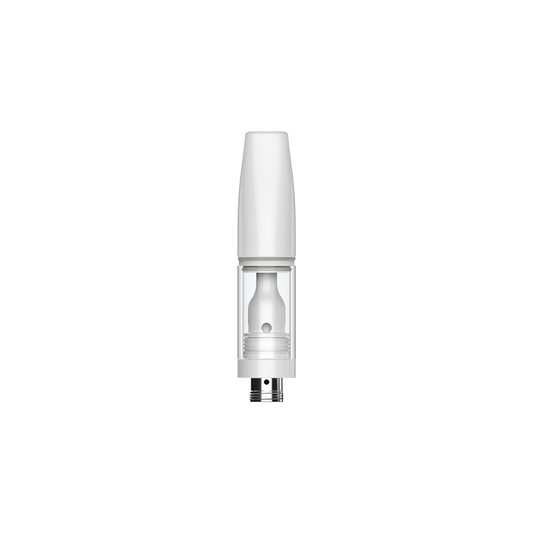
Unlike traditional wicking materials that pull liquid through woven fibers, ceramic wicking relies on an engineered micro-porous matrix. These advanced structures feature a dense network of microscopic channels that draw oil inward via capillary motion, continually feeding extract evenly across the heating element without relying on fiber saturation.
How Ceramic Changed Cannabis Vaporization
Ceramic wicking emerged as an important advancement in vape hardware in the mid-2010s, particularly as manufacturers began developing hardware for more demanding oil formulations. As cannabis extracts evolved from thin liquids to thick distillates, live resins, and terpene-rich rosins, traditional wicks struggled with fiber degradation, scorching, and flow restrictions. Ceramic provided an inert, highly heat-resistant solution designed to handle dense oils better while reducing the risk of burnt hits, completely reshaping hardware design expectations for modern extracts.
Major Advantages of Ceramic
- Uniform Thermal Distribution: Distributes heat evenly across the entire surface to help reduce localized hot spots, helping maintain consistent flavor and terpene expression.
- Viscosity Versatility: Easily saturates dense, high-viscosity extracts like live resin and live rosin, helping reduce the risk of restricted oil delivery and performance issues associated with inadequate oil flow.
- Flavor Fidelity & Material Stability: Built from an inert, heat-resistant material that resists thermal degradation, helping to reduce the risk of burnt flavors and maintaining pure taste throughout the lifespan of the vape or cartridge.
The Tale of the Tape: Cotton vs. Ceramic
Both cotton and ceramic wicks are designed to deliver oil to a heating element, but they do so in fundamentally different ways. Cotton has long been valued for its low cost and rapid initial saturation, making it a reliable standard for low-viscosity vaping in the past. Ceramic, on the other hand, uses its porous structure to promote controlled oil delivery, offering greater thermal stability, superior scorch resistance, and broader compatibility with modern cannabis formulations.
As cannabis extracts have evolved from lower-viscosity distillates to complex, high-viscosity formulations like live resin, live rosin, and liquid diamonds, the technical demands placed on vape hardware have intensified. These formulation shifts highlight critical performance trade-offs between traditional cotton wicks and advanced ceramic cores.
|
Performance Category |
Cotton Wicks |
Ceramic Heating Cores |
|
Oil Compatibility |
Best suited for thin, low-viscosity liquids (e.g., nicotine e-juice, lower-viscosity distillates). Struggles with high-viscosity extracts. |
Well suited to a broad range of viscosities, including dense live resins, live rosins, and liquid diamonds. |
|
Thermal Stability |
Vulnerable to localized hot spots and rapid heat degradation when exposed to higher temperatures. |
Highly heat-resistant and designed to promote more uniform heat distribution across the surface. |
|
Flavor Consistency |
Can deliver good flavor when properly saturated, but performance may become less consistent if oil delivery or wick saturation declines. |
Provides consistent flavor performance by supporting controlled oil delivery and thermal distribution. |
|
Scorch Resistance |
High risk of scorching, dry hits, and burnt flavor profiles under low-oil or high-heat conditions. |
Strong resistance to scorching due to an inert structure and continuous oil delivery. |
|
Durability |
Organic fibers can degrade with repeated exposure to heat and certain formulations. |
Stable inorganic structure offers strong resistance to thermal degradation. |
|
Cost & Complexity |
Lower initial cost and simple manufacturing, making it economical for basic hardware designs. |
Higher cost, potentially offset by performance consistency and durability benefits. |
Not All Ceramic Is Created Equal
While ceramic offers several advantages over traditional fiber-based wicking, “ceramic” is not a single standardized technology. Performance can vary based on factors such as porosity, pore structure, material composition, heating element design, resistance, power delivery, and the formulation being vaporized.
In other words, choosing ceramic is only part of the equation. The heating core still needs to be engineered around the oil it's designed to vaporize. A cannabis formulation's viscosity, terpene content, and thermal characteristics can all influence how the hardware delivers and vaporizes oil.
That's where ceramic engineering, not just ceramic as a material, becomes the real differentiator.
After the Bell: The Final Verdict
Wicking technology remains an important aspect of vape hardware engineering and overall oil performance. While cotton wicks established the foundation of early vaping—and still hold a valuable, cost-effective place in basic low-viscosity applications—they face distinct operational limits when paired with modern cannabis extracts. High thermal demands, complex terpene profiles, and thick viscosities can cause their organic fibers to degrade, clog, or burn, ultimately compromising flavor.
Porous ceramic has become a leading choice for hardware designed around high-viscosity cannabis formulations. By delivering continuous oil saturation through a stable, heat-resistant matrix, ceramic systems can promote more uniform thermal distribution, help reduce the risk of dry-hits, and support consistent terpene profiles over the life of the tank.
At iKrusher, we take an engineering-first approach to ceramic heating technology. Our platforms, including the iKonic Arc ceramic core and postless iKonic Flux, are designed around different approaches to oil delivery, heating, and device architecture—helping brands match their hardware to the specific demands of modern cannabis formulations. For brands focused on product reliability, flavor consistency, and hardware longevity, well-engineered ceramic heating cores offer a compelling solution for modern extract formulations.
We have a winner, folks–and it's ceramic by a TKO!